


oilfield mud tank
Designing a Reliable Water Cooling System for a Water Tank: Field Notes, Specs, and Vendor Tips If you’re wrestling with fluctuating tank temperatures (and the product quality penalties that come with that), a water cooling system for water tank often pays for itself faster than finance predicted. To be honest, most teams underestimate heat load spikes and overestimate the stability of ambient conditions. In real plants, summer swings are merciless. Industry trend check: closed-loop, plate-type heat exchangers, VFD pumps, and PLC/SCADA integration are now baseline. More facilities are asking for hygienic SS316L circuits, side-stream filtration, UV or ozone dosing, and remote alarms. This isn’t hype; it’s just where compliance and uptime are nudging us. Typical Applications Quench/holding tanks on continuous galvanizing and annealing lines. Chemical bath temperature control (polymerization, plating). Aquaculture and hatcheries (tight ±0.5–1.0°C control). Beverage and food buffer tanks; pilot-scale research tanks in universities. Spec Snapshot (example configuration) Cooling capacity ≈ 80–250 kW (real-world use may vary with ΔT and ambient) Heat exchanger Brazed plate (SS316L) or shell & tube (TEMA C) Tank materials SS304/316L; optional duplex for chloride-rich water Pump & control VFD centrifugal pumps; PLC + PT100/RTD sensors; IEC 60204-1 panels Filtration & dosing Side-stream 50–100 μm + cartridge; UV/biocide as required Noise ≈ 62–68 dB(A) @1 m Process Flow & Testing Intake → pre-filtration → heat exchanger loop → tank recirculation → temperature control (PID) → alarms (high/low temp, low flow). Welds to ASME B31.3, electrical per IEC 60204-1, FAT with 110% flow test and thermal step response. Water sampling to ISO 5667; thermal performance checked against vendor curves (CTI/TEMA guidance). Why retrofits are winning Many customers say a retrofit water cooling system for water tank beats new build economics. Shorter downtime, reuse of tank shells, and smarter controls. Service life? Around 12–15 years with quarterly PM and annual heat-exchanger cleaning. I guess the surprise is how much efficiency you get from better sensors alone. Vendor comparison (quick take) Vendor Strengths Considerations YWLX (Beijing, No.1518, LAR Valley Int’l) Revamping service and Spare Parts; custom builds for lab/industrial lines; ISO 9001; onsite commissioning; fast spares (valve blocks, rollers, pumps) Lead time varies with customization; spec clarity upfront is key Global OEM A Broad distribution; CE portfolio; mature PLC templates Less flexible on non-standard alloys; premium pricing Fabricator B (low-cost) Aggressive pricing; quick fab on standard skids Documentation gaps; limited FAT; uncertain spare parts path Customization menu Skid-mounted or field-erected water cooling system for water tank . Materials: SS316L, duplex 2205, or coated carbon steel (C5-M paints for coastal). N+1 pumps; redundant sensors; Modbus/TCP, Profinet, or OPC UA. Sanitary welds for food/aqua; ATEX/IECEx options for solvents nearby. Case note: pilot rolling lab, Beijing YWLX—known for testing rolling mills and line upgrades—retrofitted a lab quench tank with a closed-loop water cooling system for water tank . Result: inlet temp stabilized at 22±0.7°C under 120 kW load, ΔT 5°C, COP ≈4.1; water consumption cut 80% via recirculation. Commissioned alongside a control revamp; downtime was three days, which is honestly faster than we expected. About the supplier Product line: Revamping service and Spare Parts — upgrades (AGC, galvanizing line with Skin Pass Mill), special testing mills for universities (e.g., GRINM), plus mechanical/hydraulic/electrical spares (bearing chocks, mill rollers, hydraulic valve blocks). Address: No.1518, LAR Valley Int’l, Guangwai Avenue, Xicheng District, Beijing, 100055. Certifications include ISO 9001; CE on electrical panels; documentation packs on request. Standards we reference ASME B31.3 (piping), TEMA (heat exchangers), CTI thermal methods. IEC 60204-1 (machinery electrical safety), ISO 5667 (water sampling). Factory tests: pressure, flow verification, and thermal step-response plots. References: ASME B31.3 – Process Piping. TEMA Standards – Standards of the Tubular Exchanger Manufacturers Association. CTI STD-201 – Thermal Performance Certification of Evaporative Heat Rejection Equipment. IEC 60204-1 – Safety of Machinery – Electrical Equipment. ISO 5667 – Water Quality – Sampling.

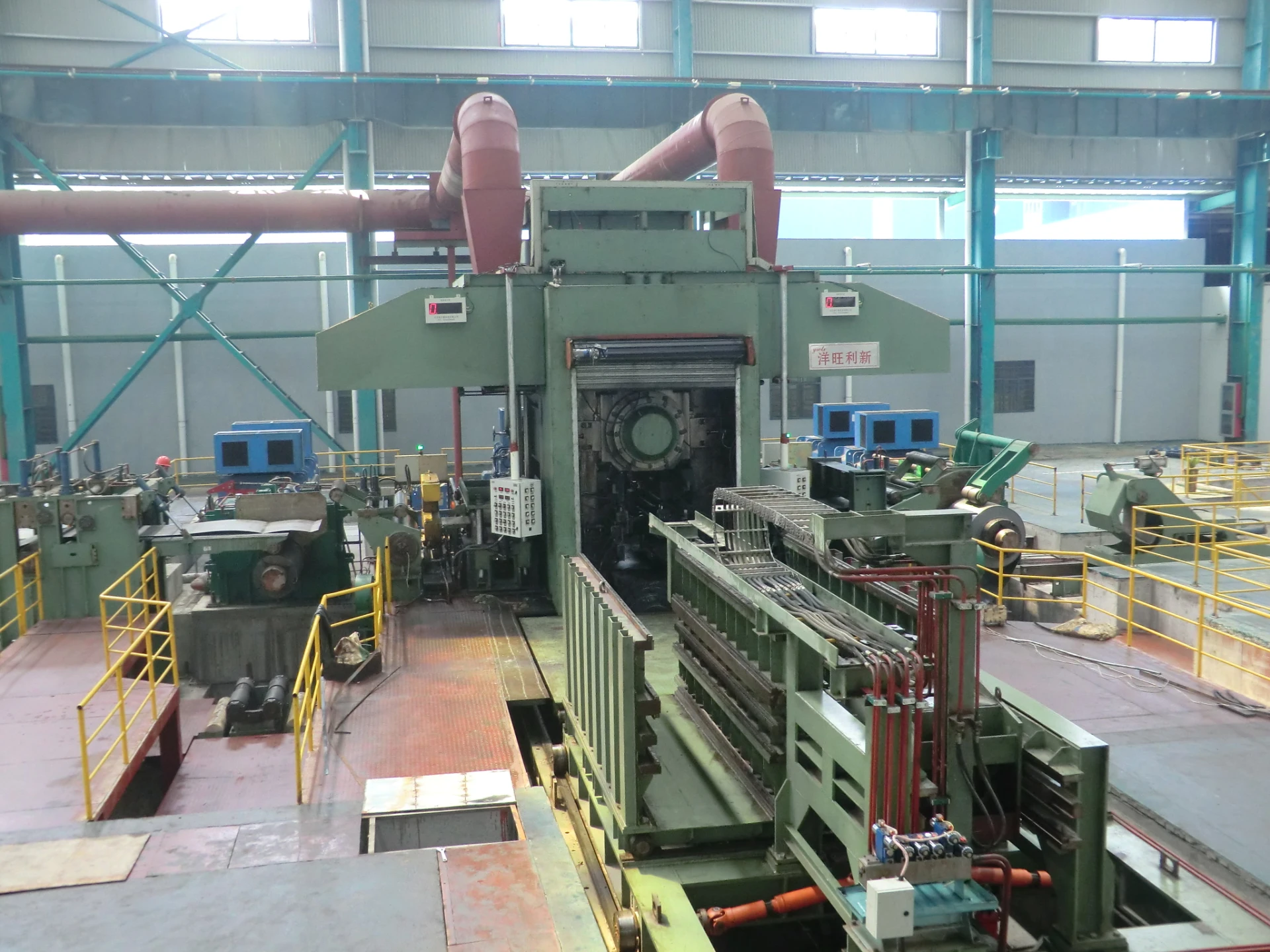
We have successfully executed over 500
projects around the world,
many first-of-their-kind
research projects and products in China, including
We have successfully executed over 500
projects around the world,
many first-of-their-kind
research projects and products in China, including
-
2004
The 1st hydraulic AGC system for hot rolling of ribbon steel
-
2006
The 1st AFC system used for 1450mm skin pass mill
-
2009
The 1st 5-stand tandem line with 2-stand POR & Uncoiler for 650mm ribbon steel
-
2012
The 1st reversing mill for 1380mm strip
-
2016
The 1st soft-rolling system used in skin pass mill
-
2019
The 1st fully automated medium-width tandem cold rolling mill
-
2021
The 1st 5000KN Twin-stand double skin pass mill
-
2022
The 1st coupled pickling line & tandem cold mill with two modes - big roller & small roller
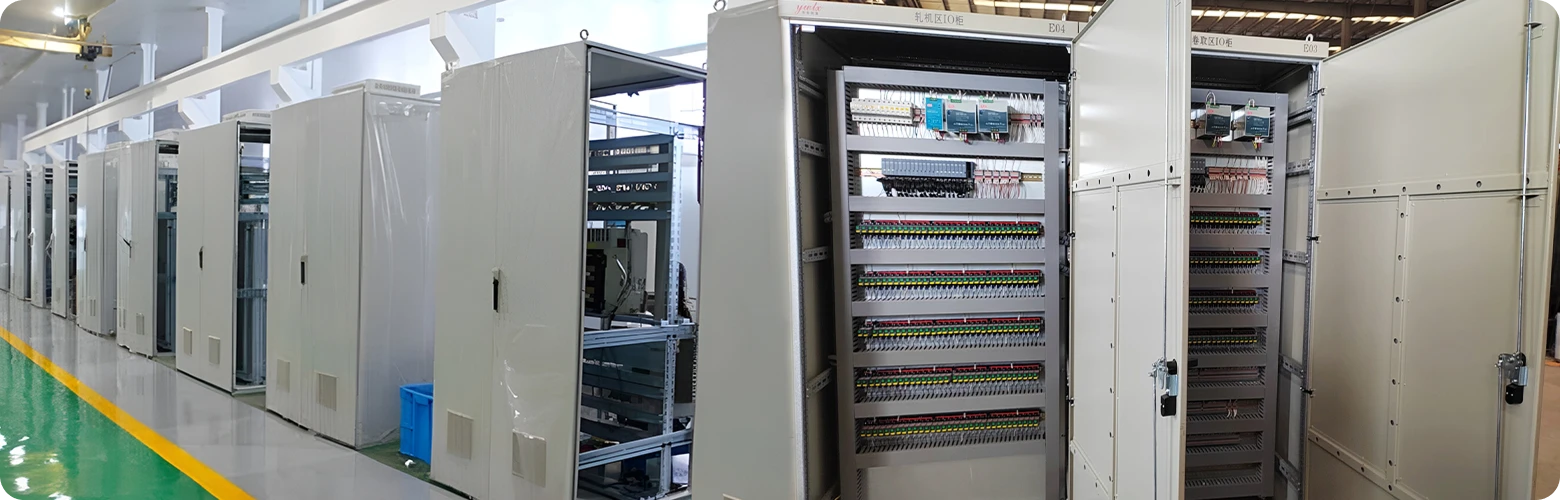
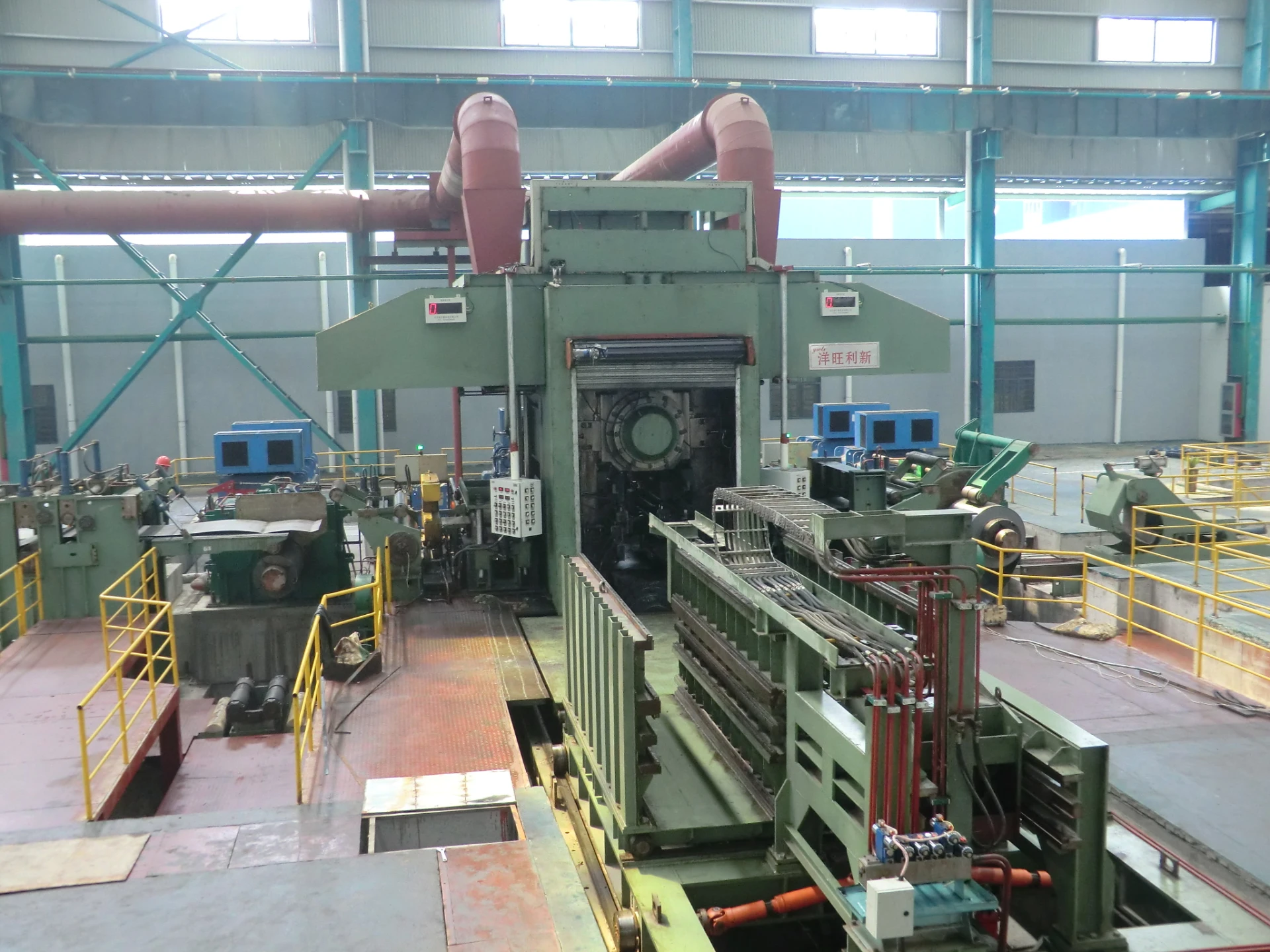
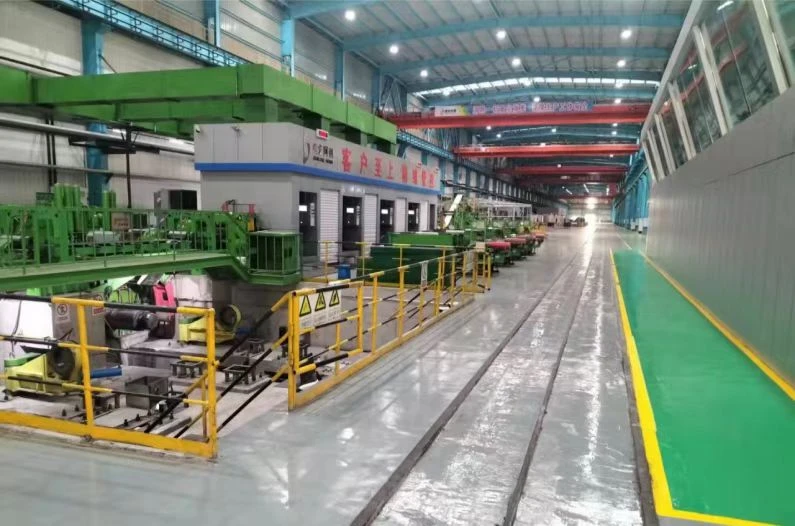
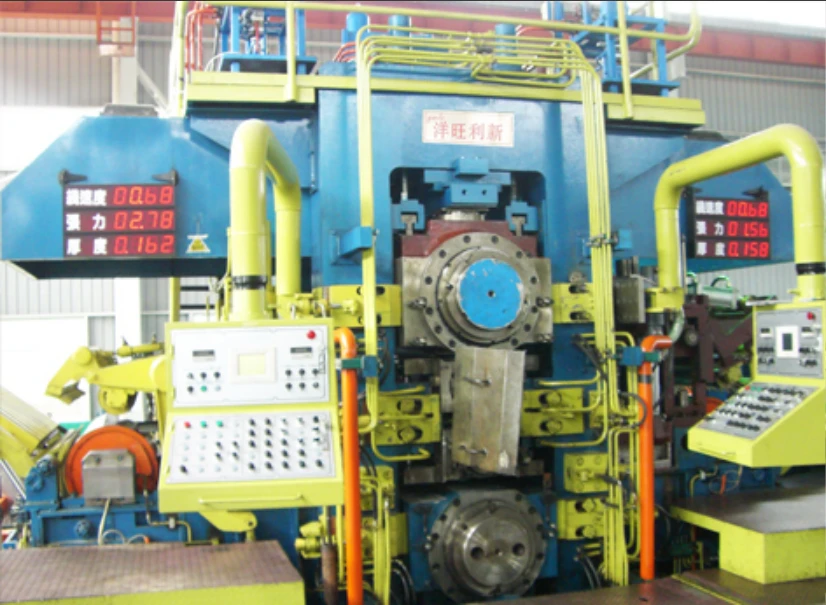
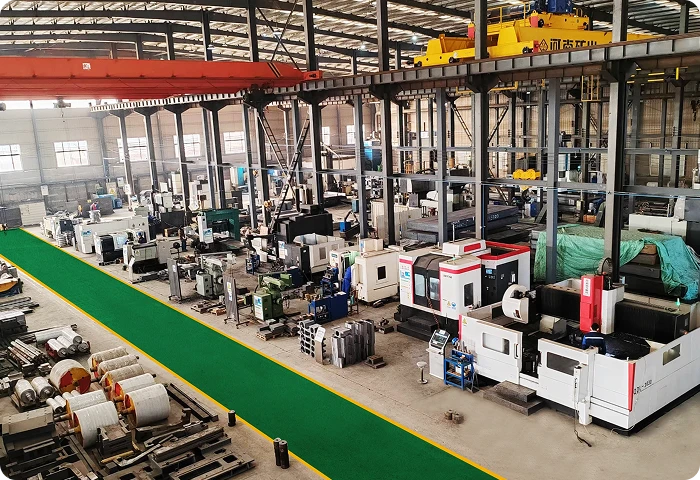
Yang Wang Li Xin operates a state-of-the-art facility over 66,000 square meters,and our manufacturing facility is fully equipped with high-tech machinery and high-capacity cranes. This enables us to handle large work pieces measuring 4.5m in width, 10m in length, and 1.5m in height, guaranteeing our capacity to produce 1800mm skin-pass mills and 1450mm rolling mills. The individual piece can weigh up to 100 tons.

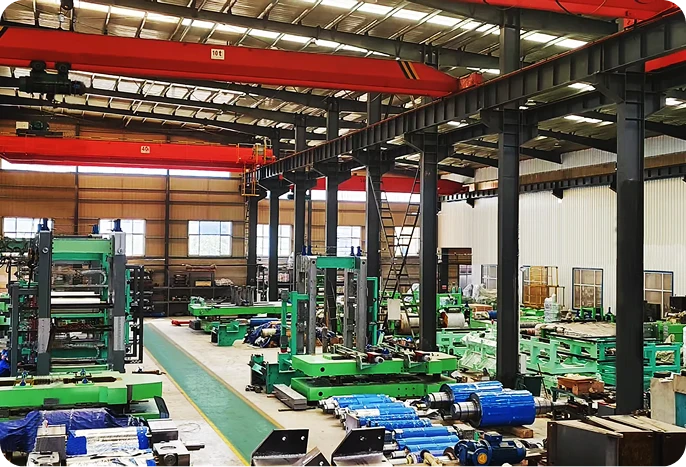

Quality is fundamental to the enterprise survival. We have established a comprehensive and meticulous quality management system and have successfully obtained ISO14000 certification. Starting from the design source, it supervises the entire production cycle, including design, procurement, processing, assembly, in-factory testing, installation, and online commissioning. The workshop is equipped with measuring tools like vernier calipers, spectrometers, hardness testers, and ultrasonic flaw detectors. They are used to check materials and control tolerances to ensure the final equipment meets or exceeds requirements. All products have a unique code, This enables the easy identification and traceability of the equipment components and ensures full control of quality.


-
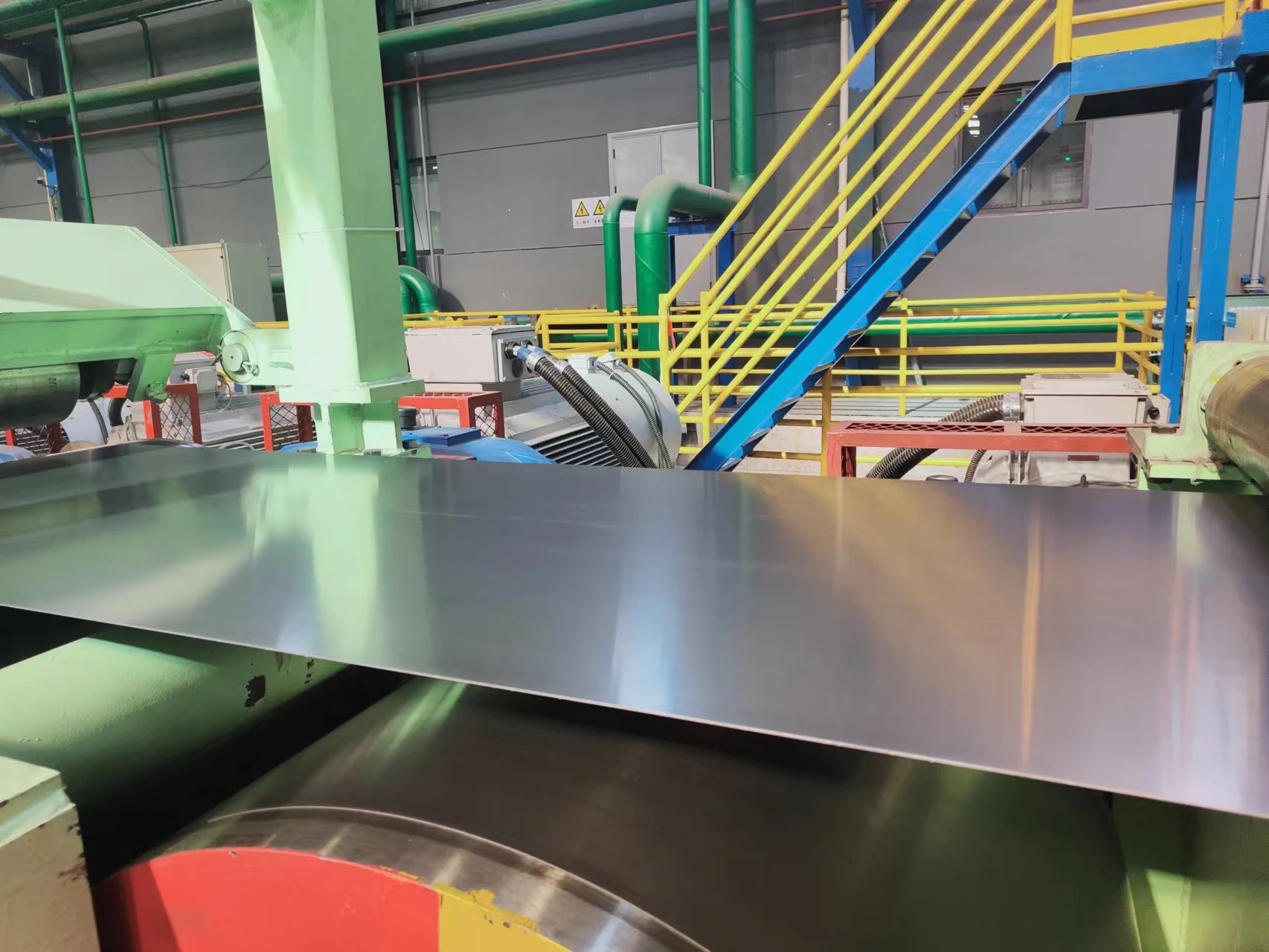 The Power of Automatic Gauge Control in Modern Rolling MillsIn the field of modern metallurgical engineering, achieving precise thickness control during the rolling process is one of the most critical challenges. As global demand grows for high-quality steel and non-ferrous metal products, the need for precision, consistency, and automation in rolling mills has never been greater. One of the most important technologies enabling this control is the AGC syst
 -
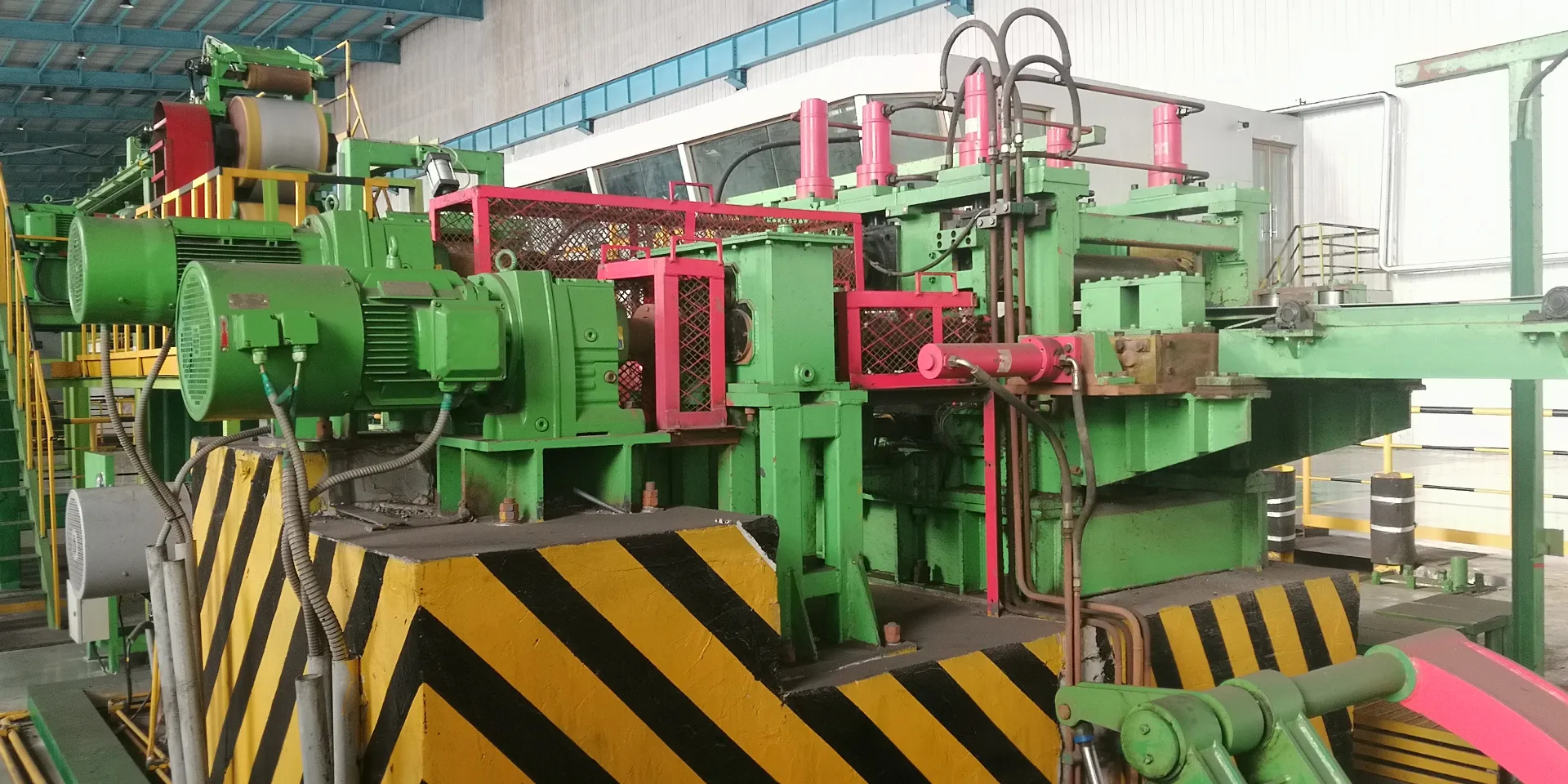 Dây chuyền sản xuất cán nóng / lạnhMáy cán định hình Kỷ nguyên mới trong ngành công nghiệp sản xuất thép Máy cán định hình đóng vai trò vô cùng quan trọng trong ngành công nghiệp sản xuất thép. Với việc nâng cao chất lượng sản phẩm, tăng hiệu suất và giảm chi phí sản xuất, những công nghệ mới nhất trong lĩnh vực này đang tạo ra một kỷ nguyên mới. Những cải tiến gần đây đã tạo ra các máy cán định hình với độ chính xác cao, có khả n
 -
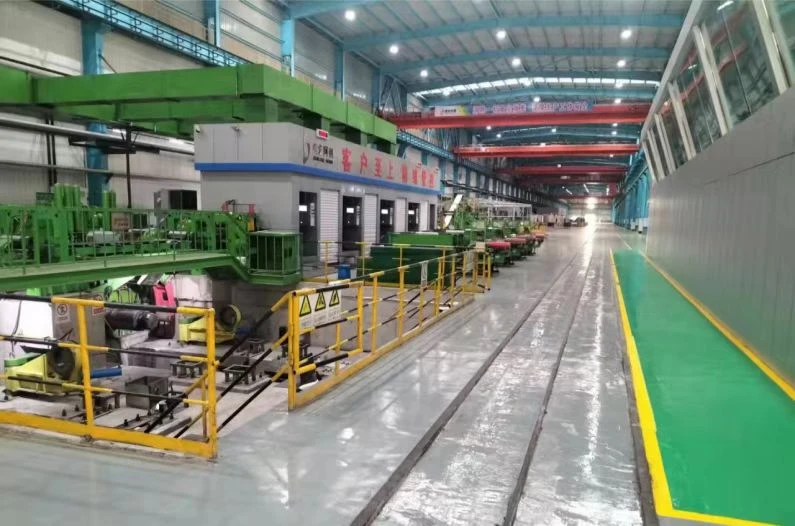 Achieve Precision with Automatic Gauge Control Cold Rolling MillElectronica China: Unveiling the Future of Industrial Power & Precision Control from Leading Chinese Manufacturers Electronica China stands as an indispensable beacon for innovation in the electronics industry, and for B2B decision-makers in advanced manufacturing, it's more than just an exhibition—it's a critical nexus for future-proofing industrial operations. While the term "mechanical" often b


